
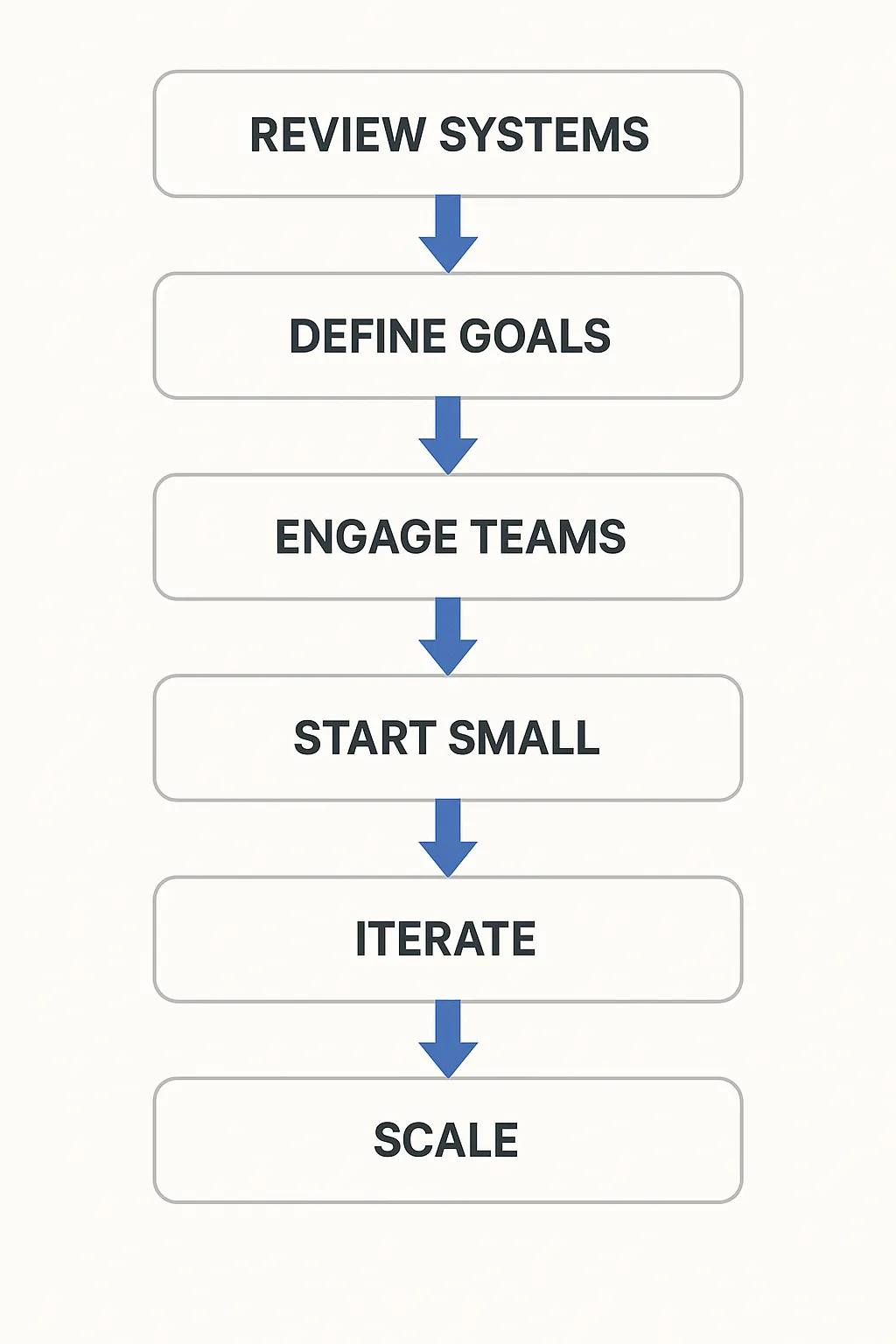
How do you use HubSpot well? Treat it as a business change, not a software install. Review how your business works today, decide what you want to fix and how you’ll measure it, put a senior leader in charge, involve your teams early, start with one team, then keep improving. HubSpot, the CRM platform, can change how you generate leads, manage deals and look after customers, but only with a plan, a clear goal and a change management approach that brings your people with you.
This guide covers how to prepare, who to involve, how to roll out and how to keep improving. If you already run HubSpot and want more from it, see our HubSpot best practices instead.
How should you prepare your business before using HubSpot?
Start by reviewing every stage of your customer journey and the systems behind it, then define the problems you need to fix, what success looks like and which metrics will prove it. Only once you understand your current state and desired outcomes should you engage a HubSpot partner. Without clear goals it is easy to lose focus and underuse a flexible tool.
Review your current systems and processes
| Area | Questions to ask |
|---|---|
| Website and digital presence | How are you attracting visitors? Is your website set up to generate leads? |
| Marketing and lead generation | How are you nurturing potential customers? Which channels work best? |
| Lead handover to sales | How smooth is the move from marketing to sales? Where do leads fall through the cracks? |
| Deal creation and management | Are deals tracked properly? Can you see the health of your pipeline? |
| Sales training and enablement | Do your sales teams have the tools and training they need to close deals? |
| Account-based marketing | Are you engaging high-value accounts strategically? |
| Forecasting and reporting | How accurate is your data? Can you forecast revenue with confidence? |
| Customer management | How are you supporting and looking after existing customers? |
Looking across all of these shows the gaps and inefficiencies HubSpot can help you address. In The Cogent Blueprint™, this is the Diagnose phase: before a client signs, we assess the business on The APPS Principle™ (Alignment of People, Processes and Systems) and review every system it runs and what each one costs.
Identify gaps and define your objectives
Ask yourself:
- What are the biggest problems we need to fix?
- What does success look like?
- Which metrics will prove we’ve achieved it?
You might want to reduce manual data entry, improve lead conversion rates or provide better after-sales support. Whatever the objective, it must be clear and aligned with your wider business strategy.
Who needs to be involved in a HubSpot rollout?
Two groups: a senior leader who sponsors the project, and the people who will use HubSpot every day. Executive sponsorship signals that the change matters and isn’t optional. Involving staff early surfaces the operational problems that aren’t obvious from the top and gives people a sense of ownership, which makes them far more likely to support the change.
Establish strong leadership and executive backing
A successful HubSpot implementation isn’t an IT project; it is a business change. Appoint someone at executive level, ideally a senior leader with sales responsibility, to champion it. This leader sets the tone, explains why the change matters and makes sure everyone understands it isn’t optional. People follow people, not software, and a respected, visible leader gives the project credibility.
Engage your teams at every level
Talk to staff in every department. Understand their day-to-day frustrations and where processes break down. Frontline insight highlights the operational speed bumps that aren’t always obvious from the top down. When people feel heard and included, they’re more likely to support the change and adopt new systems with enthusiasm. For more on this, see how to drive CRM user adoption that lasts.
How should you roll HubSpot out?
Start small and measure. Begin with a single team or department, such as sales or marketing, focus on specific problems and create quick wins, then expand once you’ve shown success. Decide up front what you will track, such as lead response times, deal close rates, marketing ROI or customer satisfaction scores, so you can show progress.
Plan your roadmap and start small
Many businesses try to transform everything at once. Don’t try to build Rome in a day. A phased approach reduces risk, lets you learn as you go and helps teams adjust without feeling overwhelmed.
Define metrics and benchmarks
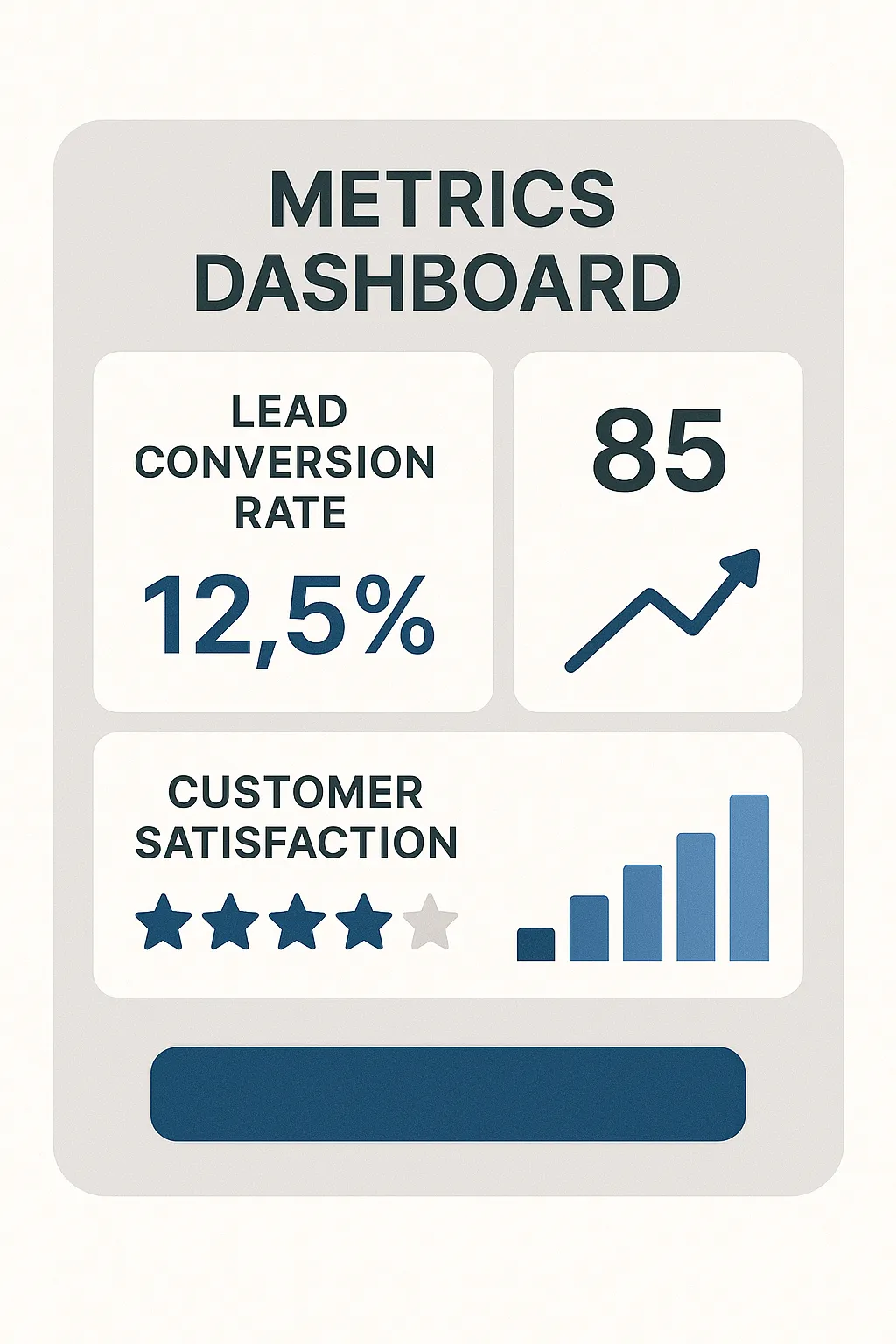
Identify what you want to track: lead response times, deal close rates, marketing ROI, customer satisfaction scores and so on. If you have historical data, set a baseline so you can measure improvements. If you don’t, don’t let that stop you. Sometimes you simply know where the problems lie, and that is enough to start. Part of your HubSpot project might include putting systems in place to gather the data you need. Metrics guide the work and keep everyone accountable.
How do you keep improving once HubSpot is live?
Expect to iterate. Even carefully planned processes produce unexpected outcomes, so be open about that with your team and build feedback loops that let you refine workflows over time. At the same time, set ambitious goals for what HubSpot will do for you, and push your implementation partner to help you get there.
Iterate and improve
Perfection is the enemy of progress. This iterative mindset is central to both agile project delivery and change management: change happens over time, not in a single event. Continuous improvement leads to better adoption, stronger results and a more resilient business.
Set big, bold goals
Don’t limit your ambitions. Whether it is automating your entire lead nurturing process, getting a full view of every customer, or integrating deeply with your ERP to align operations, aim high. Challenging your implementation partner with bold objectives keeps them motivated and helps you get full value from your investment. If ERP integration is on your list, read about connecting HubSpot to your ERP.

Why does change management matter when you start using HubSpot?
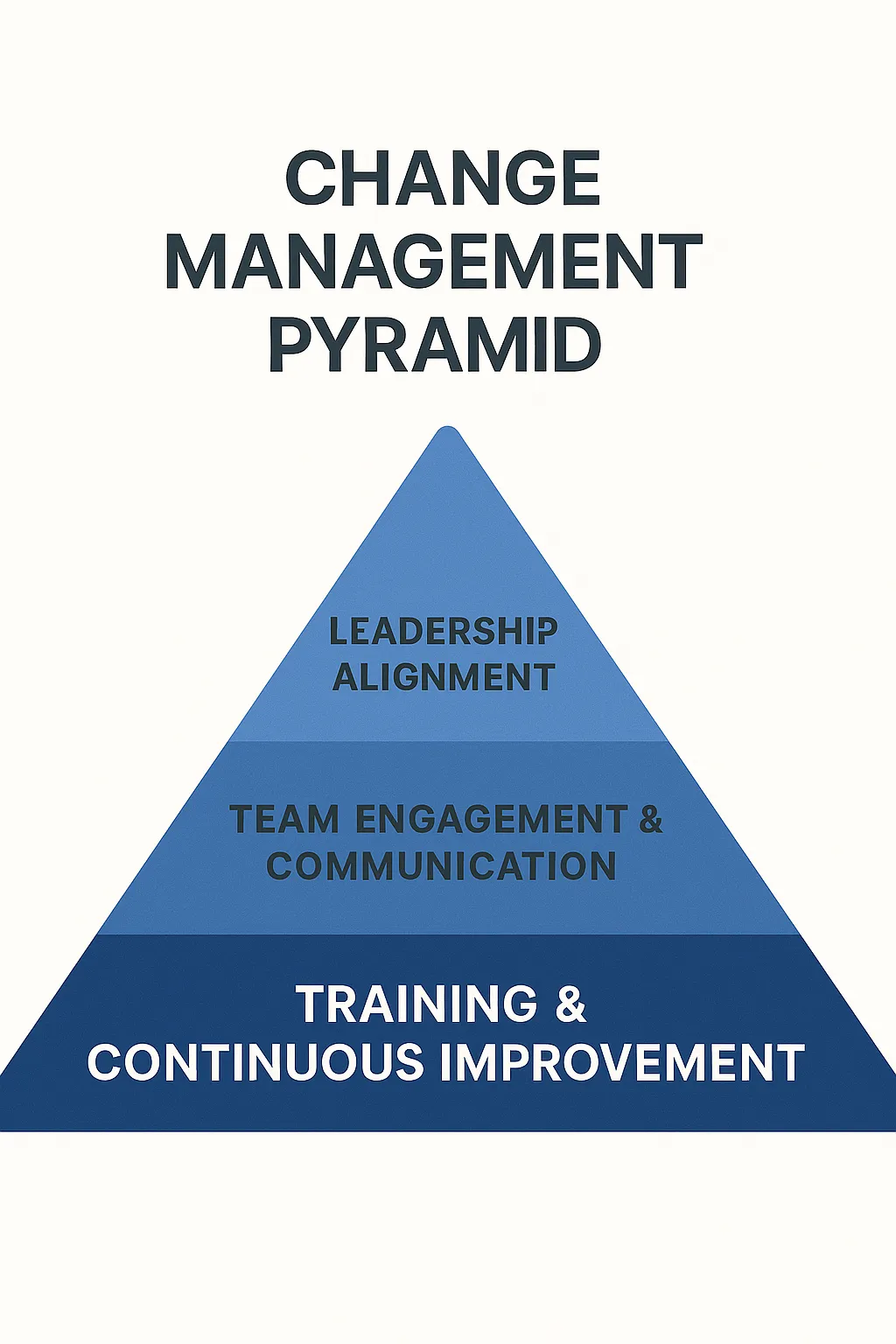
Because implementing HubSpot is as much about people as technology. Change management is what turns a new system into one your team uses. Get it right and your teams won’t just tolerate HubSpot; they’ll embrace it. It rests on five elements: leadership alignment, stakeholder engagement, clear communication, training and support, and ongoing reinforcement.
| Element | What it means |
|---|---|
| Leadership alignment | A clear executive champion to lead and support the change |
| Stakeholder engagement | Involving teams at every level to gather insight and build buy-in |
| Clear communication | Explaining the vision, benefits and progress openly |
| Training and support | Giving staff the knowledge and skills to use HubSpot confidently |
| Ongoing reinforcement | Revisiting goals, gathering feedback and refining processes |
At Cogent, role-based training happens before go-live, and our adoption and training service continues after it. For what can go wrong when this is skipped, read implementing HubSpot properly.
What are the first steps to get started with HubSpot?
Audit your processes, define your goals and gaps, get leadership backing, involve your people, plan a phased rollout, set metrics, keep improving and think big. Those eight steps, in that order, give HubSpot the best chance of becoming a platform your business grows on rather than another subscription.
- Audit your current processes: map your customer journey and internal workflows.
- Define goals and gaps: understand where you want to improve and what success looks like.
- Get leadership backing: appoint a strong executive sponsor to lead the project.
- Engage your people: listen to your teams and involve them early.
- Plan your rollout: start small, achieve early wins and expand gradually.
- Set metrics: define benchmarks and track progress continuously.
- Iterate and improve: commit to continuous improvement.
- Think big: set ambitious goals that push your business forward.
If you’d like help planning your rollout, see our HubSpot implementation service or book a call.
Questions people also ask
Should we roll HubSpot out to the whole business at once?
No. Trying to transform everything at once is a common mistake. Start with a single team or department, such as sales or marketing, solve specific problems and create quick wins. Once you've shown success and built confidence, roll HubSpot out to other areas. A phased approach reduces risk and stops teams feeling overwhelmed.
Who should lead a HubSpot project?
Appoint an executive sponsor, ideally a senior leader with sales responsibility. They set the tone, explain why the change matters and make clear it isn't optional. A HubSpot implementation is a business change rather than an IT project, and people follow people, not software, so a respected, visible leader helps overcome resistance.
What if we don't have data to benchmark against?
Don't let it stop you. If you have historical data, use it as a baseline. If not, you often already know where the problems lie, and that is enough to start. Part of your HubSpot project can be putting systems in place to gather the data you need, so you can measure progress from then on.
When should we bring in a HubSpot partner?
Once you understand your current state and the outcomes you want. Clear objectives let a partner design and implement the right solution, and stop a flexible tool from being underused. Then challenge your partner with ambitious goals, such as automating lead nurturing or integrating with your ERP, so you get full value from the investment.